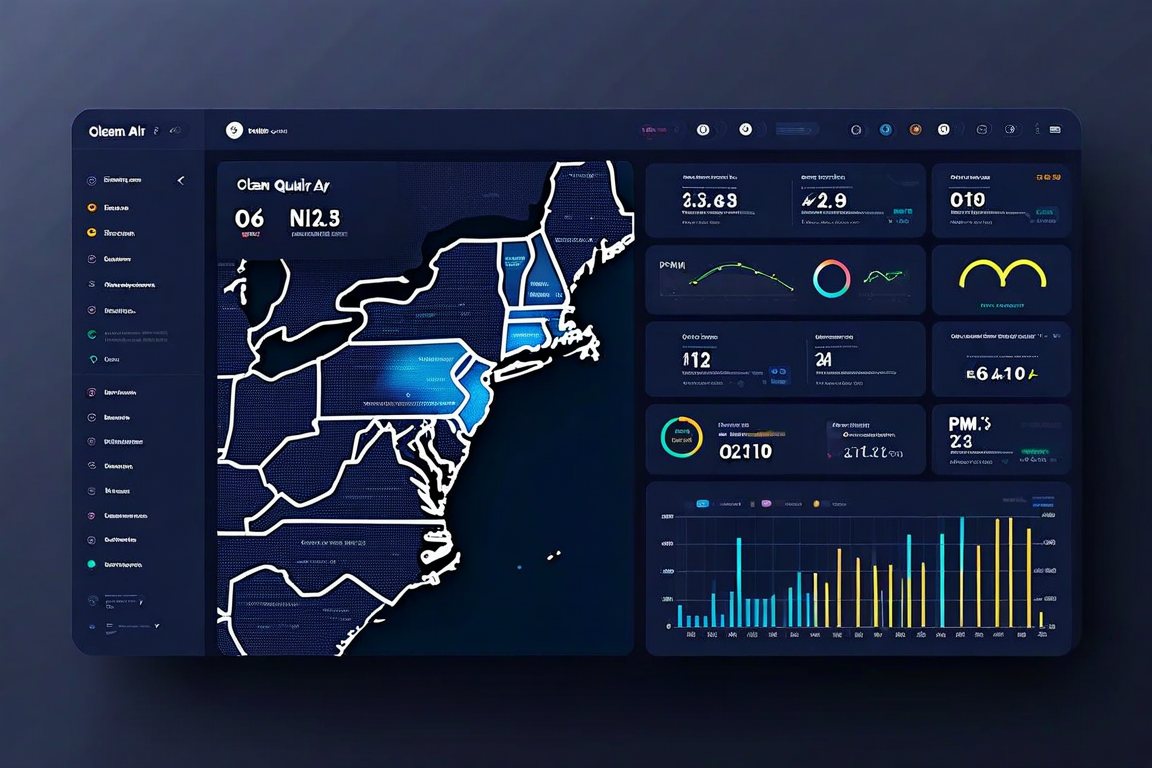
Trace AQ delivers physics-based AI forecasting for air quality — giving healthcare providers, researchers, and smart cities the advance warning they need.
Coverage & Recognition
Millions of people make decisions every day without knowing the air they breathe. Trace AQ changes that with predictive intelligence that acts before the threat arrives.
Existing air quality alerts fire after conditions deteriorate. By then, vulnerable populations have already been exposed. We give you a 4-day window to act.
Sensor networks are sparse and expensive to maintain. Our physics-based AI models fill in the gaps at any zip code — no hardware required.
Air quality data is fragmented across government portals. Trace AQ unifies, normalizes, and delivers it through a single, developer-friendly API.
Built on atmospheric science and machine learning, designed for production use from day one.
Identify wildfire smoke plumes hours before they reach populated areas using satellite data and atmospheric dispersion modeling.
Query any lat/lon or zip code globally. No sensor required at your location — our models interpolate with high fidelity.
Get hourly and daily AQI forecasts up to 4 days ahead, enabling proactive operational planning and public health alerts.
REST and WebSocket APIs with SDKs for Python, Node.js, and R. Production-ready with 99.9% uptime SLA and dedicated support.
The Trace AQ dashboard integrates real-time sensor feeds, satellite imagery, and our proprietary AI models into a unified operational view. Drill down by pollutant, location, or time horizon.
Hospitals, clinics, and public health agencies use Trace AQ to anticipate respiratory patient surges and issue protective advisories before air quality events peak.
Epidemiologists and environmental scientists access clean, normalized historical and forecast datasets via API for peer-reviewed studies and policy modeling.
Municipal governments integrate Trace AQ data into traffic management, outdoor event planning, and emergency response systems.
"Trace AQ gave our emergency management team a 3-day lead time on the wildfire smoke event. That window let us pre-position resources and issue school closure advisories before conditions became hazardous."
Air Quality Science
How Physics-Based AI Outperforms Pure Data Models in Wildfire Smoke ForecastingWe compare traditional machine learning approaches with physics-constrained models for predicting PM2.5 concentrations during active fire events.
Use Cases
Smart City Air Quality Integration: A Technical Guide for Municipal EngineersA step-by-step walkthrough of integrating the Trace AQ REST API into city infrastructure management dashboards using Python and Node.js.
Research
PM2.5 Exposure and Hospital Admissions: Closing the Data Gap with Hyperlocal ForecastingNew study leveraging Trace AQ data demonstrates a 23% improvement in anticipating respiratory-related ED admissions with 48-hour forecast data.